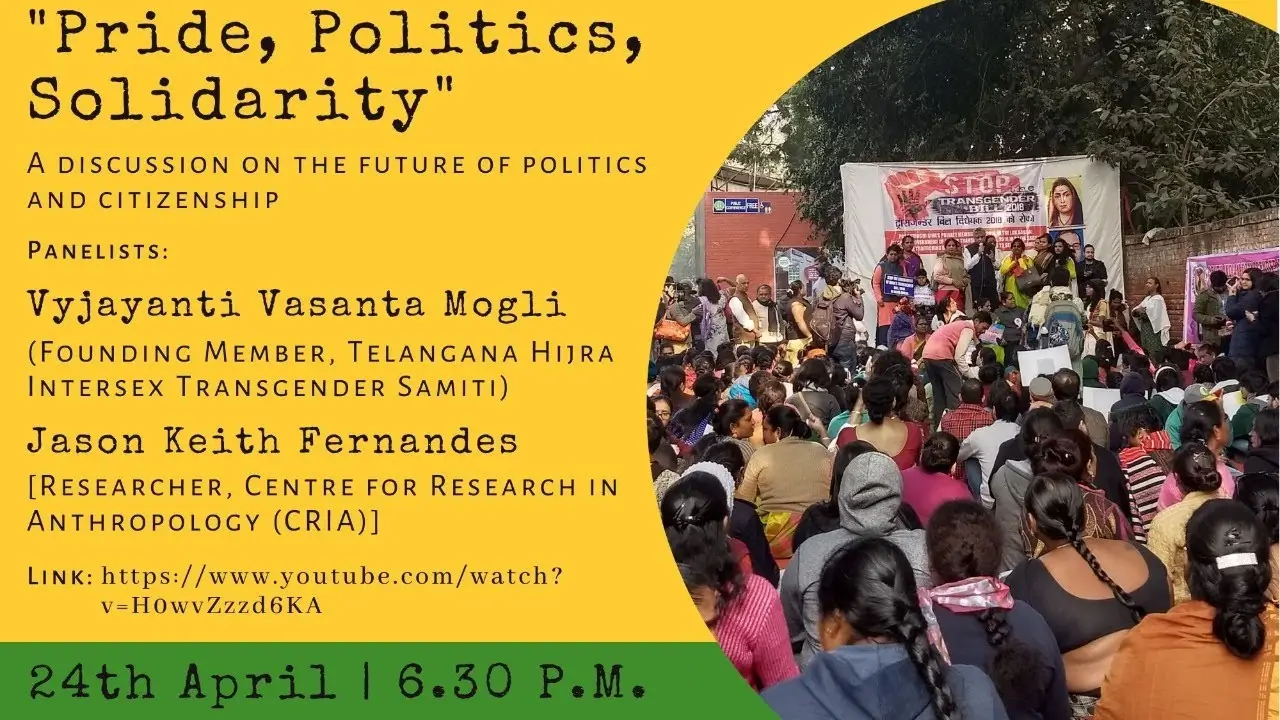
The charges of sedition filed against a group of participants at a Mumbai Pride Solidarity gathering in February this year raised important questions about existing fissures within the “queer movement” in India. In the projected utopia of queer lives post-377, what does it mean to demand solidarity between subjects who emerge from multiple political and social histories?
As the lockdown continues, the term “solidarity” is co-opted to deploy communal hatred, suppress dissent and target communities, all in the garb of creating a united India to fight the virus. In this context, how can we think of organizing during an ongoing pandemic and think of a future politics that does not prioritize some lives over others?